
He didn’t quit Google to start a company. He quit because the company already existed.
When jus avila finally told his team he had quit Google, the strange part was not that they were shocked.
The strange part was that they were happy.
For most people, leaving Google sounds like the beginning of the story. The dramatic leap. The founder moment. The day someone walks away from prestige, salary, stability, and a name that opens almost any door.
But for him, that was never the real beginning.
By the time he quit, the company was already there.
Carrots was not an idea in a notebook. It was not a weekend experiment. It was not a landing page with a Stripe button and a dream.
It was a real company. More than twenty people. Offices in Barcelona. Apps in the market. Investors. Salaries. Pressure. Mistakes. Scars. A team that had been waiting for one thing: for their founder to finally be fully there.
That is what makes the moment unusual. A founder walks into his own office and tells the people working for his company that he has quit his job — not because he is ready to start building, but because they have already been building for years while he was split between two lives.
The side project was no longer living after hours. The founder had left the cave.
The golden cage
For years, jus had the kind of job people are told to want.
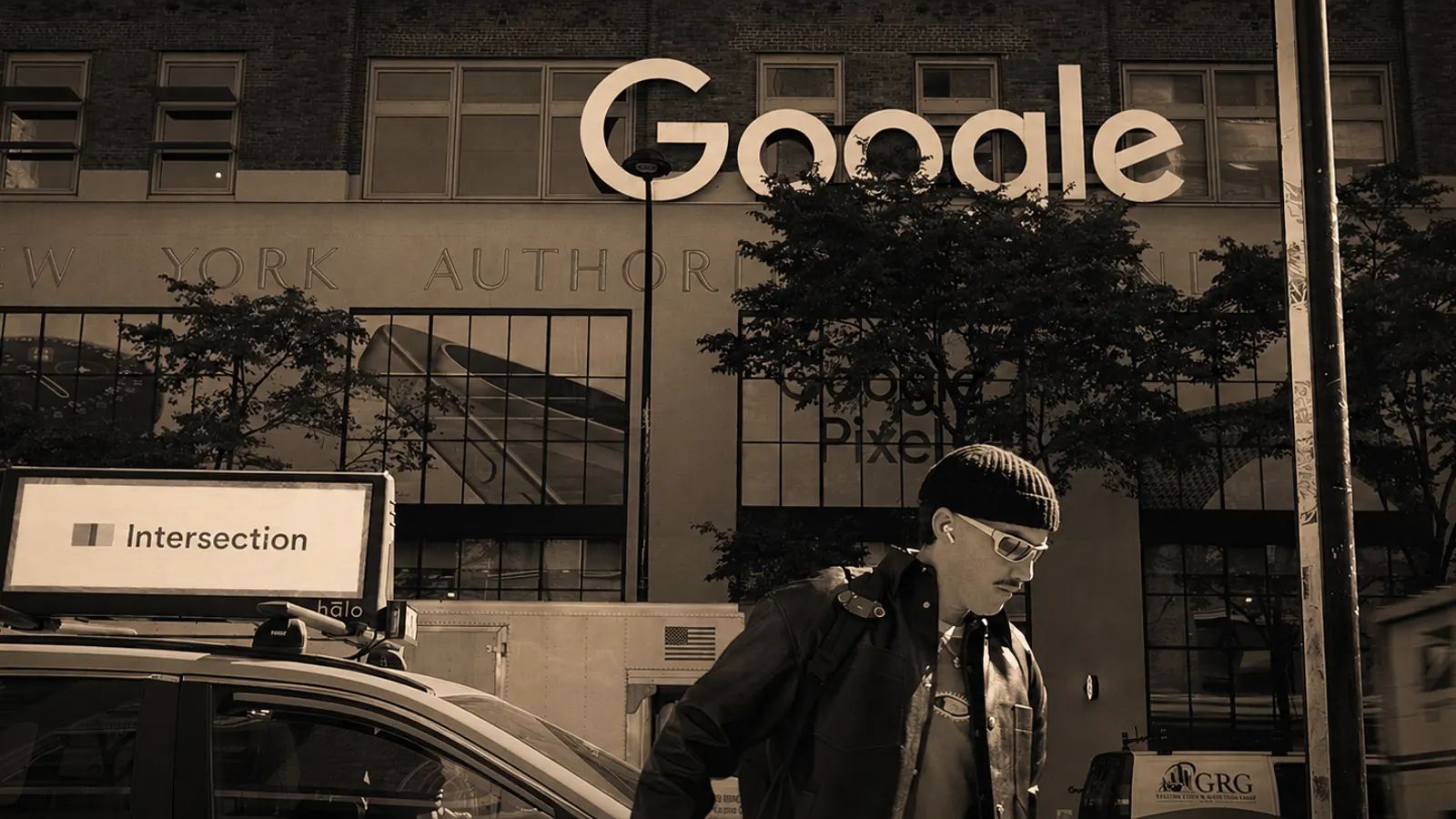
He worked at Google. First in Dublin, later closer to home. It gave him money, structure, status, and the feeling that he had made it. His parents were proud. His family was proud. Strangers understood the logo. Recruiters understood the logo. Events understood the logo.
A Google badge is not just a job. It is a social shortcut. It explains you before you have to explain yourself.
And he worked hard for it. Partly because he loved the environment. Partly because he had imposter syndrome. Partly because when you enter a room full of brilliant people, the easiest way to survive is to outwork the doubt.
For a while, it worked. He made money. He helped his family. He travelled. He did the things a successful life was supposed to include. At one point, he went to Australia alone to surf — the kind of trip that looks like freedom from the outside.
But something was missing.
The problem with prestige is that it can become a very elegant form of obedience. You are rewarded for following a path so well that, at some point, you forget to ask whether the path is yours.
Google was impressive. But it did not make him unique. It made him legible.
And there is a difference. Society understood Google. His family understood Google. The world knew where to place him. But deep down, he started to feel that he was performing a version of success that made sense to everyone except the part of him that still wanted to build something of his own.
He had become very good at the life other people could explain. He was less sure he was living the life only he could create.
The room where it started again
Then Covid happened.
He had travelled back to Spain to see his nephew being born. Soon after, the borders closed. He could not return to Dublin. He ended up stuck in his father’s house, in the middle of nowhere, with almost no signal, two pairs of underwear, and a computer.
It sounds cinematic now. At the time, it was not. The world had stopped. His life had stopped. And suddenly, he was back in the room where he had grown up.
He opened the closet and saw the clothes from when he was younger. Skater clothes. Teenage clothes. Pieces of a version of himself that felt more raw, more confused, but also more connected to something real.
That moment hit him. Not in a clean motivational way — more like an existential slap. He had spent years becoming impressive. But in that room, with the world frozen and his old clothes in front of him, he started wondering what had happened to the parts of him that did not fit inside a corporate career ladder.
He started searching. For meaning. For love. For identity. For a project that felt like his. At one point he tried to volunteer with an NGO helping refugees in Greece; they were fully staffed and turned him down. The detail matters less because of the NGO and more because of what it reveals: he was looking everywhere.
One missing piece was Char. She had been in his mind for a long time. During Covid they started speaking, then dating digitally, then finally meeting in a random Airbnb near her mother’s house. In the middle of global uncertainty, one part of his life became clear.
Another missing piece was Carrots.
Building in the cave
Carrots started as a project.
At first, jus tried to code it himself. Then he realised he was not good enough to build it the way it needed to be built. So he started hiring freelancers. Then more people. Then the project became serious.
The early dream was simple: build mobile apps, learn distribution, and create something that could eventually become independent from his Google salary.
For a moment, it looked like it was working. Then everything broke.
Carrots hit a wall with the app stores — an account problem after the company had apparently oversold some messaging inside an app. Momentum collapsed. People left. The dream that had started to look real became fragile again.
He does not blame the people who left. Why would they stay? From the outside, it probably looked like a risky bet led by a guy who was still at Google and had not made it work the first time.
But for him, the failure was brutal — because he had already started imagining the exit. Not the startup exit. The personal one. The day he would leave Google and become a founder full-time.
Instead, he had to restart. Carrots 2.0 began with debt, pressure, and a deeper cave. He took on serious financial risk — hundreds of thousands of euros in debt and commitments. He still had the Google job. And he had Nahuel, his CTO, beside him.
For around a year and a half, they worked intensely. Not in the glamorous founder way people post about — more in the hidden, exhausting, slightly insane way that happens when you are trying to keep a prestigious job alive while rebuilding a company that almost died.
There was a moment when he thought the whole thing might break him. The new app was not performing. The debt was still there. The company was not moving fast enough. The fear was no longer abstract.
He imagined the worst version of the future: Carrots fails, the debt remains, his energy is gone, and he returns to Google not as someone who tried and learned, but as someone who has been beaten.
One Sunday, sitting on a rooftop with Char after lunch, he started crying. Not a clean founder tear. Not a dramatic movie moment. Just a body finally admitting the pressure had gone too far. He is careful about how he describes it, out of respect for people who have been through worse. But it was a breaking point.
And breaking points often force a new plan.
The plan B that saved plan A
He realised Carrots had a problem.
It was a subscription business. The economics could be powerful over time, but the cash flow was not immediate enough to survive the pressure. He needed something more transactional — something that could generate cash faster and help finance Carrots while Carrots matured.
So he took time away from Google — part unpaid leave, part holidays. Almost two months. He went with Char and his dog to a house in the mountains. If the first version of Carrots had been built in the cave, this was the deeper cave.
That is where Chilis was born.
Chilis was not meant to be the dream company. It was the company that could keep the dream company alive.
Around the same time, AI tools were starting to become genuinely useful, and he saw he could produce content far faster than before. He found an opening in personal-finance content in the US: most players were targeting middle-aged men, and he saw a gap around women, especially women managing household finances. He built a digital platform positioned differently from the competitors and approached advertisers who cared about that audience.
The first client he closed became one of the best deals the company ever made. Chilis was positive almost from month zero.
That changed everything. Before returning fully to Google, jus knew he could not run Google, Carrots, and Chilis at once. He needed someone to operate Chilis — and a few weeks later, at an event in London, he met someone over beers who eventually became its CEO.
Suddenly the structure was different. Google provided salary and stability. Chilis provided transactional cash flow. Carrots stayed alive long enough to improve. Plan B had started financing plan A.
That is one of the least romantic and most useful founder lessons in the whole story: sometimes your dream company survives because you build a less romantic company next to it. Not every business has to be the one. Some businesses are bridges.
Carrots 3.0
With Chilis working, he had more mental peace.
Carrots’ unit economics started improving. The apps got stronger. The company started to look less like a desperate rebuild and more like something with a real shot. That gave him the courage to talk to investors.
He started showing what Carrots was becoming: a mobile app studio built around speed, distribution, product iteration, and paid acquisition. Not a single-app bet, but a machine for spotting demand and building consumer-subscription products around it.
Eventually, he raised capital. The round gave him something he had not had for a long time: oxygen. He could pay back debt. He could give Nahuel a proper salary after a long stretch of being underpaid. He could hire properly. He could stop operating purely from survival mode.
But he still did not quit Google.
That is one of the most important parts of the story. The romantic founder version says: the second you have conviction, leap. He did not leap. He built a bridge. He wanted to leave Google with the company strong enough to survive his full attention — not dependent on one heroic jump. He wanted a team. He wanted offices. He wanted to replace the golden cage before opening it.
Then Carrots opened its Barcelona office, and his life became absurd. He was working full-time at Google while building a company with a growing team, travelling between Dublin and Barcelona, trying to be present in two realities that both wanted the best version of him.
At one point he planned to quit. Then Google offered him a role in Barcelona — five minutes by bike from the Carrots office. It was almost comical. The cage had moved closer to the dream.
So he stayed a little longer. Not because he lacked courage, but because it bought him more time, more salary, more runway, more chance to build the foundation properly.
This is where the popular founder story usually lies. It worships the leap because the leap is cinematic. But for many people, the real work is not jumping. It is engineering the moment when the jump no longer kills you.
The escape architecture
During that period, he also started building around Carrots.
He created Phosphenes.vc as the holding and investment vehicle for the broader ecosystem. He got involved with Arbiads, a search arbitrage company. He invested in AppStack, an attribution and app-infrastructure company. He later created Berries, a consulting and advisory business that could turn his experience into income and equity.
From the outside, that can look like random diversification. It was not. It was escape architecture.
Carrots was the main company. But to leave Google, he needed a system around it: cash flow, upside, people, operators, and enough structure to make the final move from strength instead of panic. The plan was never quit and see what happens. The plan was: build Carrots, use Chilis to finance the gap, use Berries to replace part of the salary, invest through Phosphenes, delegate the rest to operators — and go all in only when the foundation could hold.
It took years. And it cost more than time. It cost social life. It cost health. It cost hobbies. It cost memories.
That is one of the strange things he says now: the last five years were probably the most fulfilling professional years of his life, but he does not remember enough of them. Too much happened in the cave.
That is the part people underestimate about building quietly. The company grows. The skills grow. The bank account may grow. The confidence grows. But your memories can disappear inside the machine. You are so focused on surviving the chapter that you forget to record it.
Why he wants to document it now
That is one reason he is finally building the YouTube channel.
Not to become an influencer in the shallow sense — but because he regrets not documenting the beginning. He wishes he had footage from day zero of Carrots: the first code, the first freelancer, the first failure, the first recovery, the rooftop moment, the mountain house, the first investor conversations, the first office, the first hires. The days when nobody knew whether it would work.
That footage does not exist. So he wants the next chapter to be different. The channel is partly for himself — a way to remember, a way to create proof that the life he is building actually happened.
It is also a commitment device. Going public raises the standard. When you say what you want to build in front of people, you create pressure to show up at a higher level. You turn private ambition into public accountability.
But there is a third reason, the emotional one. When he was starting, he would have liked to see someone like him talking honestly about it. Not a genius founder. Not the smartest kid in the room. Not the mythical dropout with perfect timing and perfect confidence. Just someone normal enough to feel close, but intense enough to keep going — someone saying: yes, it is lonely; yes, people will tell you you’re crazy; yes, leaving a prestigious job can feel irrational; yes, building alone after hours can mess with your head; and yes, there is a way through if you keep showing up.
That is why the channel matters. It is not only a founder vlog. It is the end of the hidden chapter. For five years he built from the cave. Now he wants to build in public.
When he came back from Greece — where he had gone with Char to switch off and put his head in order — he sat down with one of his earliest colleagues for a catch-up. He had two things to tell her. The first: he had quit Google. The second: the next day, he was ready to tell the whole team.
Her reaction was not congratulations. It was closer to finally. Because for the people inside Carrots, this was never a reckless decision. It was the day they had been waiting for — the day the founder stopped splitting himself between the company that made him credible and the company that now needed him completely.
He told her he also wanted to do the channel properly, and to give something back to the team that had trusted him while he wasn’t yet fully there. He mentioned a house near Barcelona — maybe the biggest he’d seen nearby — where, one day, the whole team could lock in together for a few days. Live together. Build together. Celebrate together. The company was no longer an after-hours project. It had a place to go.
Going all in
By the time he finally quit Google, the pieces had moved.
Chilis had been sold after losing a major client. Arbiads had its own CEO and CTO. AppStack was an investment. Berries existed as an advisory vehicle. Phosphenes held the ecosystem. And Carrots was the focus.
That is the real ending of this chapter — not the resignation itself, but the alignment. For years he had been split across identities: Google employee, founder, operator, investor, advisor, builder in the cave, person trying to keep everything alive. Now, for the first time, the centre was clear. Carrots was no longer the side business. Carrots was the main bet.
So the beginning of his story is not really about leaving Google. It is about what happens when the life you built after hours becomes too real to keep treating as secondary. It is about the cost of building quietly. It is about the team waiting on the other side of your decision. It is about the strange sadness of losing memories during the most important years of your life. And it is about a founder finally walking into his own company without one foot still trapped somewhere else.
For most people, quitting Google would be the brave part. For him, the brave part was the five years before. The quitting was just the moment the outside world finally caught up.
The practical lesson
There is a useful lesson here for anyone building after hours.
The leap is usually a lie. Not because people never quit dramatically — some do. But because the healthiest version of going all in is often less cinematic than that. It is quieter. Slower. More engineered.
You build revenue before identity. You build cash flow before freedom. You build operators before disappearance. You build a bridge before you burn anything. You build proof before you ask people to believe.
A side project becomes a company long before the outside world recognises it. It becomes a company the first time someone depends on it. The first time you make payroll. The first time a customer complains because they expected you to be serious. The first time your partner sees what it is costing you. The first time you cannot explain it as a hobby anymore. The first time quitting stops feeling like a fantasy and starts feeling like an operational necessity.
That is the real founder moment. Not the resignation email — the moment the thing you built quietly becomes too alive to keep in the corner of your life.
Everything after that is paperwork.